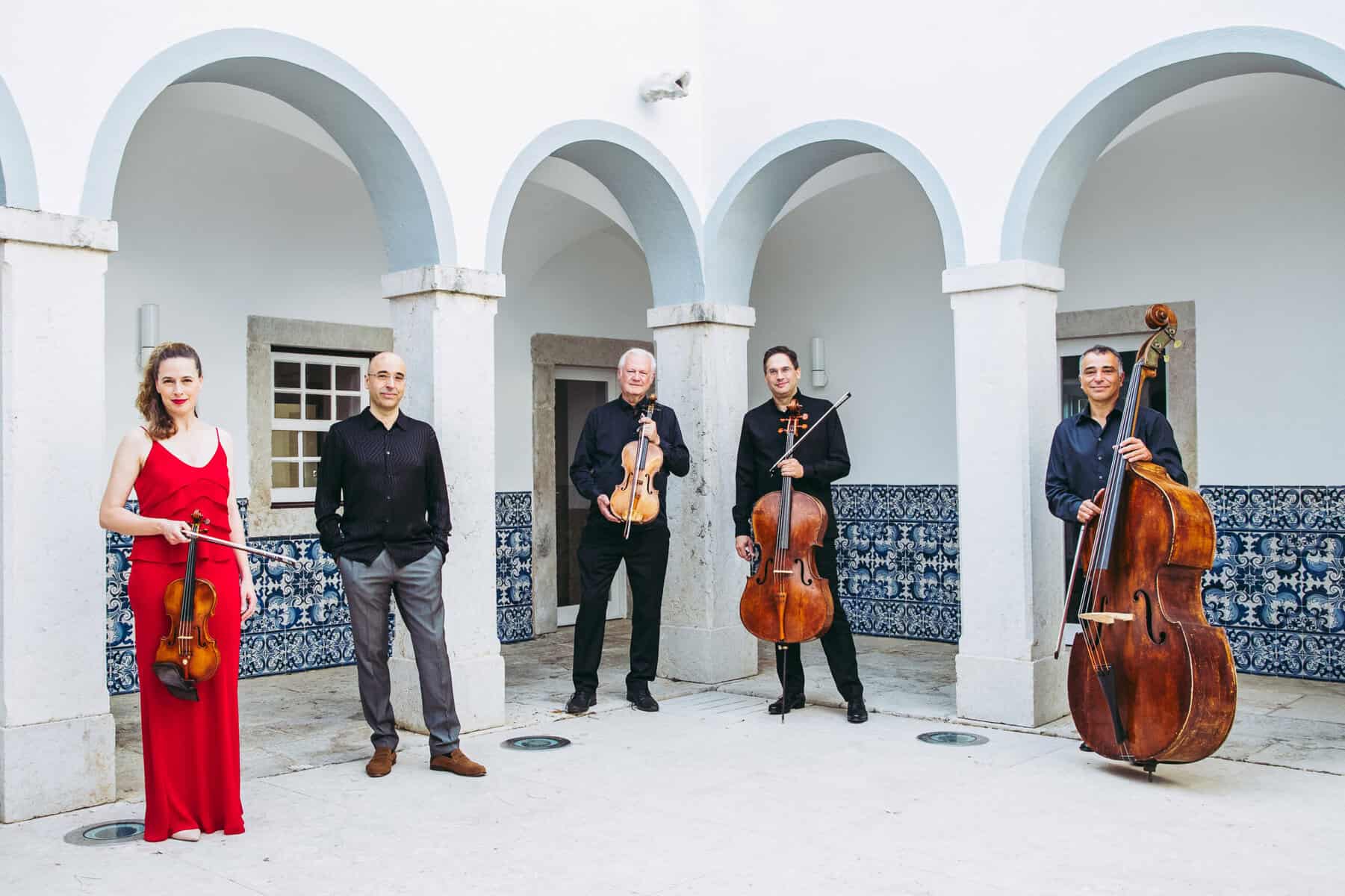
The DSCH—Shostakovich Ensemble return with a new recording that celebrates two major works from the Romantic chamber music repertoire.
The new album, released by LAWO Classics, pairs Franz Schubert’s Piano Quintet in A major, D. 667, “The Trout” with Antonín Dvořák’s Piano Quartet No. 1 in D major, Op. 23.
The recording brings together five internationally acclaimed musicians. Their performance highlights the melody, emotion and musical dialogue within both works.
A Distinguished Chamber Music Ensemble
Pianist and artistic director Filipe Pinto-Ribeiro founded the DSCH—Shostakovich Ensemble in Lisbon in 2006. Since then, the ensemble has built a strong international reputation.
Its flexible format allows musicians from different backgrounds to collaborate. The group also explores repertoire from the Classical era through to contemporary music.
For this new recording, Pinto-Ribeiro performs alongside violinist Esther Hoppe, violist Lars Anders Tomter, cellist Christian Poltéra and double bassist Tiago Pinto-Ribeiro.
Each musician brings extensive experience from major concert halls, festivals and chamber music projects.
Schubert’s Beloved ‘The Trout’
At the heart of the album sits Schubert’s Piano Quintet in A major, D. 667, better known as The Trout.
Schubert wrote the piece in 1819 during a summer visit to the Austrian town of Steyr. The unusual instrumentation includes piano, violin, viola, cello and double bass.
The composer also drew on his earlier song Die Forelle, or The Trout. He transformed its melody into five variations for the fourth movement.
The quintet combines flowing melodies with lively rhythms. It also creates a warm and conversational atmosphere between the instruments.
Dvořák Adds Rhythmic Energy
The album also features Dvořák’s Piano Quartet No. 1 in D major, Op. 23.
Dvořák composed the quartet in 1875 during a highly productive period. The work reveals his developing musical identity through lyrical melodies and folk-inspired ideas.
The piece also features strong Slavic influences and rhythmic vitality.
Its three movements move between reflective passages and energetic exchanges. The final movement uses rhythms associated with the Czech furiant folk dance, creating an exuberant finish.
Two Romantic Masterpieces
Schubert and Dvořák approach chamber music in different ways. However, both composers share a strong focus on melody, expression and instrumental colour.
The pairing gives the DSCH—Shostakovich Ensemble space to explore these contrasting musical personalities. Their collaborative approach also brings fresh energy to two established works.
Recorded in Germany
The ensemble recorded the album between 26 and 29 October 2025 at Reitstadel in Neumarkt in der Oberpfalz, Germany.
Vegard Landaas produced the recording, while Thomas Woldén handled balance engineering and mastering. The Portuguese Republic’s Directorate-General for the Arts also supported the project.
The new release adds to the ensemble’s acclaimed discography. Previous projects include the world premiere recording of Dmitry Shostakovich’s complete chamber music for piano and strings. The ensemble also recorded Beethoven’s Piano Trios.